






A single transposed model number can stall a submittal approval and delay the ordering, delivery, or installation that follows.
Yet producing the package is still highly manual. A project manager often starts with an approved quote or bill of materials (BOM), transfers product information into a spreadsheet, searches manufacturer sites for current cut sheets, marks specified models and configurations, and assembles the documents for review.
Most of that preparation is repeatable document work spread across manufacturer websites, shared drives, spreadsheets, and PDF editors. Every handoff takes time and creates an opportunity for an outdated sheet, incorrect model, or missed option to enter the package.
AI-Native Submittals can change the division of labor. Instead of spending hours building packages from scratch, project teams can spend more time verifying what is ready for approval.
Which steps can be automated?
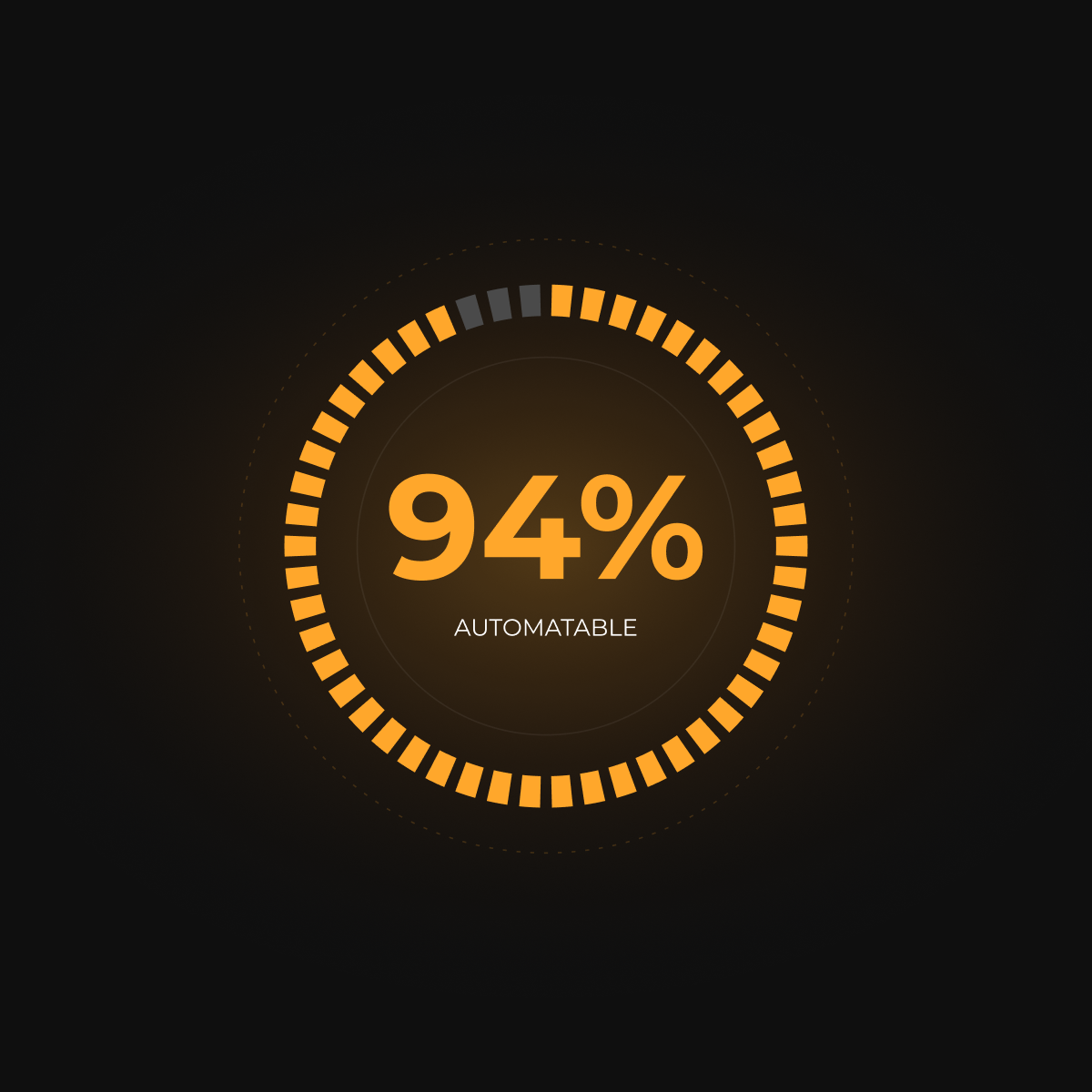
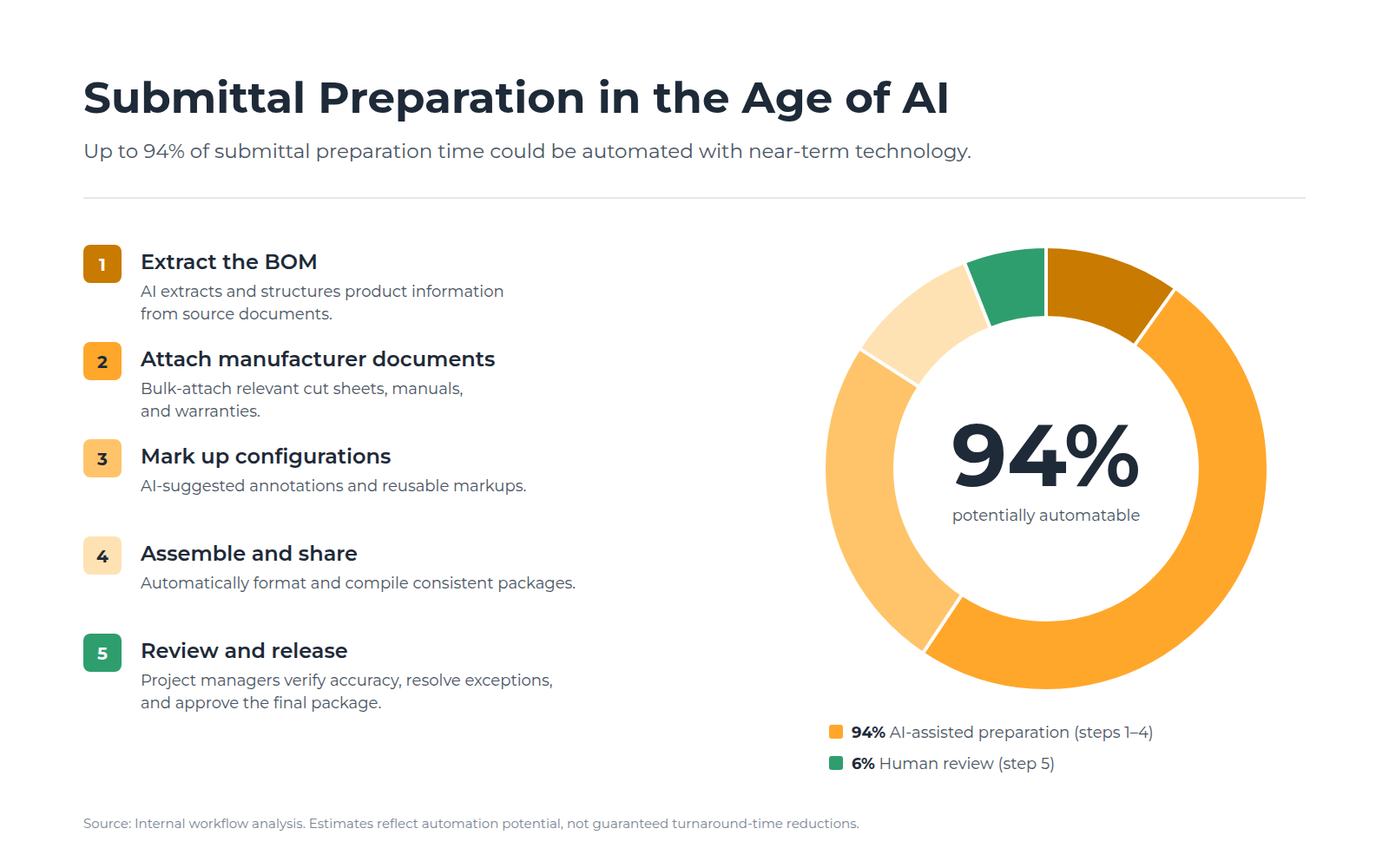
An internal workflow analysis estimates that up to 94% of time spent on submittal preparation activities could be automated with near-term technology.
That doesn't mean eliminating the project team's role or reducing every submittal's turnaround time by 94%. It means that most of the preparation work—from transferring product information to assembling the package—can be automated, leaving employees to review the output and resolve exceptions.
How AI and workflow automation change each step
STEP 01
Extract the bill of materials
Manual process: Someone retypes or copies line items from quote PDFs, plans, schedules, or specifications. An incorrect digit can propagate through every downstream document.
AI reads relevant source documents, identifies product tables and sections, and structures extracted items into a BOM. Team members can verify unusual entries against the source instead of transcribing everything manually.
STEP 02
Attach the right manufacturer documents
Manual process: A project manager visits manufacturer sites, downloads documents, checks versions, and associates cut sheets with individual line items. An outdated cut sheet can look correct at a glance.
Instead of searching manufacturer websites one product at a time, project managers can attach the relevant cut sheets, manuals, and warranties to multiple BOM items in bulk. Parspec draws from a continuously maintained library of more than 3.2 million product documents across 5,000+ manufacturers, reducing the time spent finding documentation and the risk of using outdated cut sheets.
STEP 03
Mark up models and configurations
Manual process: Someone scans each cut sheet, identifies the applicable model and selected options, and highlights them in a PDF tool.
Rather than manually scanning cut sheets and highlighting part numbers or configurations, project managers receive suggested annotations they can apply with a click. Previously used markups can also carry over to repeat products, reducing the need to mark up the same configurations across multiple projects.
STEP 04
Assemble and share the package
Manual process: Employees collect PDFs, rearrange pages, create cover sheets, format headers and footers, and send versions for review.
Submittal software applies reusable templates, assembles documents into a consistent package, and supports shared review and trackable distribution. This automation removes significant administrative work while helping teams stand out.
STEP 05
Review and release: where the project team stays in control
The project manager verifies product-to-BOM matches, configurations, exceptions, substitutions, document completeness, and any project-specific approval requirements. The team—not the AI—decides when the package is ready for release.
The goal is not to automate accountability. It is to deliver a more complete first draft so people can focus on accuracy and exceptions instead of assembling every page themselves.
What faster submittals mean for project teams
For distributors, automating repetitive submittal preparation gives project managers more time to coordinate deliveries, resolve project issues, and respond to contractors. Instead of spending hours gathering and formatting documentation, they can focus on keeping projects moving.
For rep agencies, faster submittal preparation means responding to distributor and contractor requests more quickly without sacrificing package consistency.
Across both businesses, standardized workflows also make it easier to produce consistent deliverables across employees and branches, reducing reliance on individual employees' knowledge of where documents are stored.
Results reported by customers using Parspec
Customer results illustrate what automation can mean for project operations:
- Rexel reduced submittal preparation time by 52%.
- Graybar reported 43% time savings.
- SESCO reduced the time and cost of submittal creation by 50%.
- Across surveyed Parspec users, 92% reported higher-quality deliverables.
These customer outcomes demonstrate how reducing repetitive preparation work can improve PM capacity, turnaround, and package consistency.
Submittal preparation doesn't have to consume hours of a project manager's day. By automating repetitive tasks like document retrieval, markup, and package assembly, teams can spend less time building submittals and more time keeping projects moving.
With Parspec, distributors and rep agencies can create complete, consistent submittal packages faster, while retaining control over final review and approval.
Book a demo to see how Parspec helps your team build submittals in half the time.
Book a Demo →
.png?width=767&name=Group%201%20(1).png)